Non-citizen voting, police precautions fail to make the November 3 ballot in LA

The Los Angeles City Council withdrew studies on two high-profile ballot proposals Tuesday, delaying plans to expand oversight of its police department and expand voting rights to noncitizens.
Council members unanimously voted down the measure on Nov. 3. that we would ask voters to create a way for non-citizens — likely green card holders and Deferred Action for Childhood Arrivals recipients — to vote in city and school board elections.
About an hour later, council members voted 8-6 to delay a second vote that would have given them direct power over broader policy decisions at the Los Angeles Police Department. That vote came after the Los Angeles Police Protective League, the union that represents police officers, threatened to sue, saying city negotiators failed to meet and discuss the changes with the union.
Both proposals are now off the Nov. 3 ballot — but will be considered by the committee for consideration in the upcoming election year.
The two votes capped a year-long effort to rewrite the City Charter, LA’s governing document. A citizens’ commission on charter changes met in June and held a number of meetings, submitting a long list of proposals to the council.
Two weeks ago, council members refused to write a way to increase the number of council seats to 25, from 15, saying they needed more study. They also opposed a proposal to move to ranked-choice voting, which would allow voters to write in a list of candidates of their choice. Both were recommended by the commission.
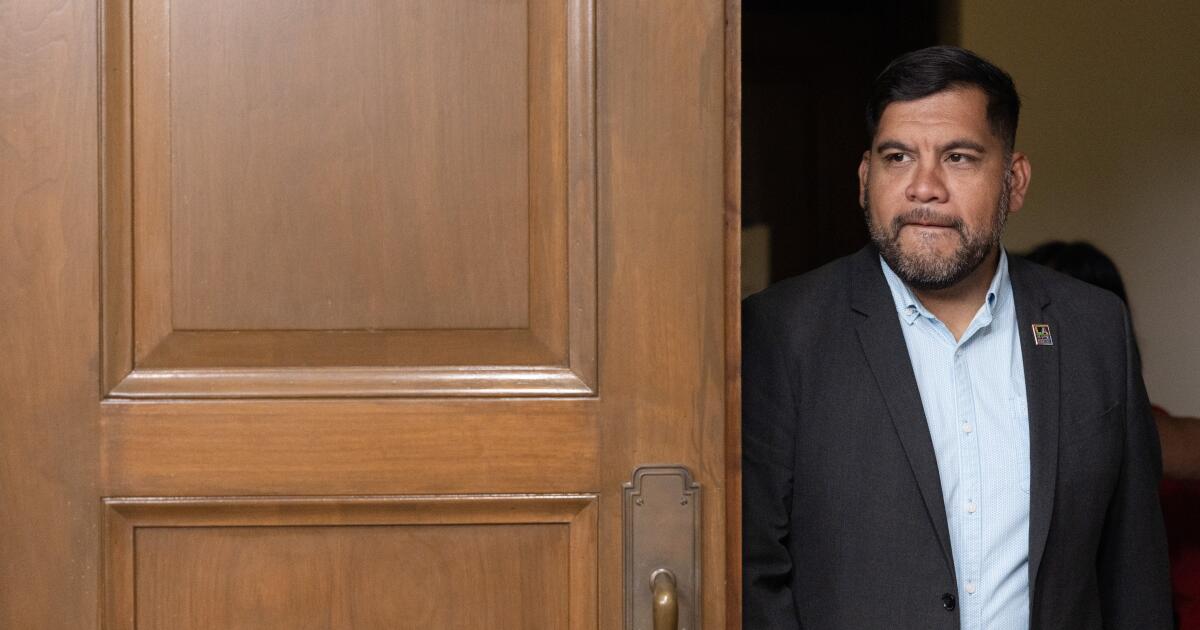
Councilman Hugo Soto-Martínez, who represents the Hollywood section, expressed frustration with the results.
“It’s almost laughable,” he said. “We have nothing to show for it. It’s a process of years, and communication with the whole city, and there is nothing important to show for it.”
Soto-Martínez had been a major proponent of a proposal to expand non-citizen voting rights in LA But on Tuesday, he announced he would join his colleagues in withdrawing the proposal, saying he had been hearing complaints from members of the Black community.
MPAC Los Angeles, or Mobilizing Preachers and Communities, sent a letter to Soto-Martínez on Sunday saying his proposal “could inadvertently expose citizens to the risk of heightened surveillance, political attacks and terror.”
“The matter deserves more public discussion than we have received,” wrote Pastor KW Tulloss, the group’s western regional director, in the letter. “A change of this nature should not move forward without extensive community engagement, a full analysis of the legal and financial implications, and a clear understanding of how it will affect the people it seeks to serve.”
Soto-Martínez agreed to send the proposal to the committee and vowed to include it in the next election.
“I grew up in South Central Los Angeles,” he said. “Black and Brown unity is deep for me, and it means something to me, and I don’t want this to be a passing thing that’s seen as a bad thing — a bad thing for the city of Los Angeles.”
MPAC is not alone in raising the alarm over the non-citizen voting proposal.
Councilor Traci Park, who voted for Soto-Martínez’s proposal two weeks ago, said she has concluded since then that there is too much to know about how it will work. He expressed his fear that the city will not be able to protect non-voters if federal immigration agents show up at the polling stations.
“What worries me here is that if this goes to the election, the voters will not really know what they are voting for, because we don’t really know either,” he said. “These are things that should be considered early on before we put anything into the charter.”
Councilman John Lee offered a similar argument, reading from a warning posted on a San Francisco election website, which allows non-residents to vote in school board elections. That warning states: “Any information you provide to the Department of Elections, including your name and address, may be obtained by Immigration and Customs Enforcement (ICE) and other agencies, organizations and individuals.”
“It’s not scary to bring up these issues,” he said. “They are real issues that must be resolved before Los Angeles asks voters to approve a similar plan.”
Soto-Martínez said he considers the warnings from Lee and Park to be alarming, noting that immigrant rights groups are ready to move forward with his proposal.
“This country was created by people who were brave and pushed for everyone to have the right to vote,” he said.
The non-resident voting proposal is not the only one to be withdrawn at the last minute.
The council stalled on a vote resolution that would have given council members greater power over police policy, an idea approved by the 13-member Police Reform Commission. That power currently rests with the Board of Police Commissioners, whose members are appointed by the mayor.
That vote came after council members walked out of a closed-door discussion about legal threats from the police union.
Councilor Tim McOsker, a lawyer who once counted the police union among his clients, said he supports the council’s ability to target the police department. However, he said the measure was rushed to the vote.
McOsker said he wants a council committee to take a closer look at the idea and come up with a “comprehensive list of suggestions.”
“Police structure and reforms are very important,” he said. “I don’t want to do one small piece [where] we don’t understand what it does and what it doesn’t do.”